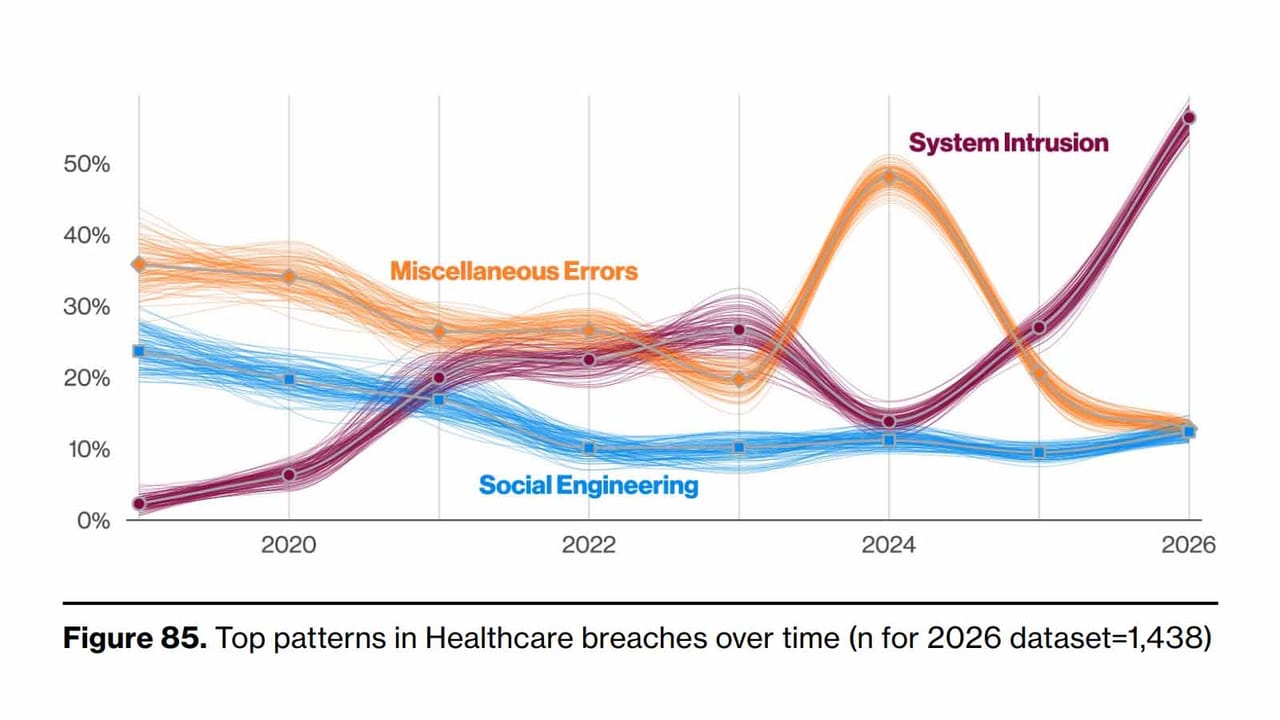
The glow of monitors pulsed in the dimly lit newsroom, a familiar hum beneath the frantic keystrokes. We were hunched over the latest Verizon Data Breach Investigations Report (DBIR) — the annual autopsy of digital malfeasance — and something was different this year. It wasn’t just the sheer volume of breaches; it was how they were happening. Imagine a fortress, supposedly impenetrable, its walls made of advanced firewalls and complex encryption. Then, a stranger walks up, smiles, and you hand them the keys to the kingdom. That’s the picture the 2026 DBIR paints for the healthcare sector.
The report, a tome of digital dread, screams a single, chilling message: social engineering, the art of human manipulation, has become the weapon of choice. While ransomware and the lingering fallout from vendor breaches are still very much on the menu — like a persistent, nasty cough — the real epidemic is far more insidious. It’s about preying on our innate trust, our urgency, and our tendency to help.
The Great Deception:
This isn’t your grandpa’s phishing email, folks. We’re talking about campaigns so sophisticated, so tailored, they can bypass even the most vigilant IT security teams. Think of it like this: if ransomware is a battering ram, social engineering is a master spy infiltrating the castle by posing as a trusted advisor. The Verizon report highlights a terrifying trend where attackers aren’t just hitting random targets; they’re doing their homework, understanding hospital workflows, and crafting messages that are almost impossible to distinguish from legitimate communications.
The healthcare industry, already a complex ecosystem fraught with sensitive data and critical patient care demands, is a perfect storm for these attacks. The sheer volume of information exchanged daily — patient records, billing details, research data — creates a vast attack surface. And when you add the pressure cooker environment of healthcare professionals, often working under immense stress and with limited time, the opportunity for a slip-up becomes alarmingly high.
“The evolution of social engineering tactics presents an escalating challenge, turning the human element into the most accessible vulnerability for cybercriminals targeting the healthcare sector.”
This quote from the DBIR isn’t just a statement; it’s a siren call. It underscores that the battle for data security in healthcare has moved beyond purely technological defenses. The human firewall, that elusive and often porous layer of defense, is now the primary battleground.
Beyond the Band-Aids:
While the report details the persistence of ransomware and the ripple effects of breaches originating from third-party vendors (a whole other can of worms), the emphasis on social engineering forces a fundamental re-evaluation of security postures. For years, the focus has been on hardening networks, patching vulnerabilities, and deploying advanced threat detection. All critical, absolutely. But these are like building higher walls around a city while ignoring the traitors within.
My take? This is the AI era flexing its muscles in truly terrifying ways. Think about it: AI can churn out hyper-realistic phishing emails, mimic voices with chilling accuracy, and even generate deepfake videos that could impersonate executives. Attackers are using AI to turbocharge their social engineering efforts, making them more scalable and more convincing than ever before. This is the platform shift the futurists have been shouting about, and it’s landing squarely on the doorstep of the healthcare industry.
Why Does This Matter for Developers?
The implications for those building and maintaining the digital infrastructure of healthcare are immense. Developers are now on the front lines, not just against code-based exploits, but against exploits that target the very users of their systems. This means building applications with stronger authentication, more intuitive user interfaces that naturally guide users toward secure actions, and perhaps even integrating AI-powered tools to detect and flag suspicious user behavior in real-time. It’s about designing systems that are inherently more resistant to manipulation, even when the human element is compromised.
The data pouring out of the DBIR isn’t just a headline; it’s a roadmap for future cyber threats. For healthcare organizations and the technologists who serve them, understanding this shift isn’t optional. It’s the difference between a secure digital future and a cascade of devastating breaches.
🧬 Related Insights
- Read more: Fake Windows Update in France Steals Passwords from Breach-Exposed Users
- Read more: Fast16 Malware: Nuclear Simulations Sabotaged Pre-Stuxnet
Frequently Asked Questions
What is social engineering in cybersecurity? Social engineering is a method of influencing people to give up confidential information or perform actions that compromise security. It relies on psychological manipulation rather than technical hacking.
How is AI impacting social engineering attacks? AI is enabling attackers to create more sophisticated and personalized phishing messages, realistic deepfakes, and voice cloning, making social engineering attacks harder to detect.
What can healthcare organizations do to combat these attacks? Beyond technical defenses, healthcare organizations need to invest heavily in comprehensive, ongoing employee training on social engineering tactics, implement multi-factor authentication rigorously, and establish clear protocols for handling sensitive information.