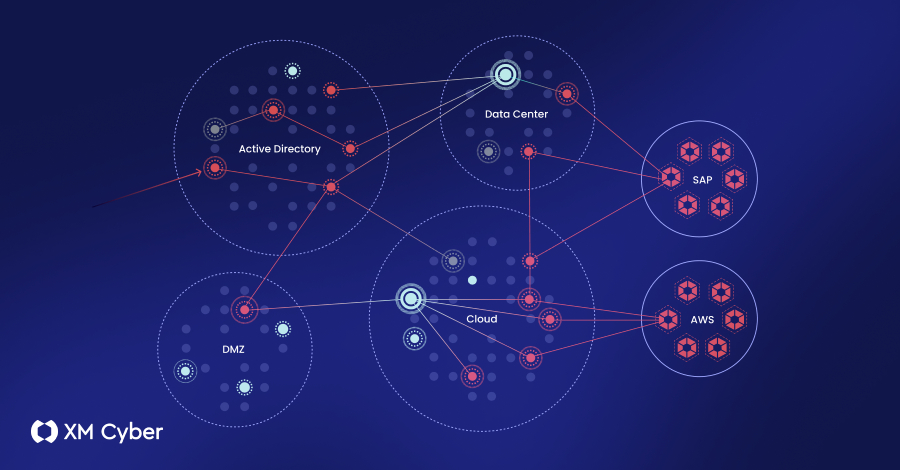
Is your organization still operating under the illusion that a few weeks’ buffer for patching is adequate? If so, you’re not just behind the cybersecurity curve; you’re practically inviting digital ruin. The reality, stark and unyielding, is that the patching window has shrunk to a sliver, forcing a fundamental re-evaluation of security priorities. Assume breach. That’s the new mantra, and it elevates initiatives like attack surface management, micro-segmentation, identity management, and attack path validation from mere best practices to the absolute bedrock of any functional cybersecurity department.
And in this increasingly hostile digital arena, Rapid7 is making a bold claim: they’re the singular vendor offering a truly unified platform designed to conquer Continuous Threat Exposure Management (CTEM).
The CTEM Framework: Rapid7’s Five-Step Solution
Scoping and Discovery: Unmasking the Unknown
Forget ‘unknown unknowns.’ Rapid7’s platform aims for absolute visibility across your entire hybrid attack surface. Their Surface Command (CAASM) tool acts as a central repository, integrating asset and identity data from over 200 sources. Simultaneously, Vulnerability Management actively probes your network, unearthing shadow IT that might otherwise lurk undetected. But they don’t stop there.
External Attack Surface Management (EASM) scans the vast expanse of the internet, meticulously tracking changes to your public-facing digital real estate. And for the cloud-native world, their Unified CNAPP offers real-time, agentless insights into AWS, Azure, GCP, and Kubernetes environments. Through something they call Event-Driven Harvesting (EDH), changes are detected in under a minute, mapping not just assets, but the complex web of identities and permissions that define your cloud risk.
Prioritization: Beyond the Generic Risk Score
Static risk scores? So 2023. Rapid7 champions what they call Active Risk and Threat-Aware Context. Their system ingests real-world exploitability data from Rapid7 Labs and the Exploit Prediction Scoring System (EPSS), prioritizing vulnerabilities based on their actual likelihood of being exploited. Furthermore, the platform can integrate your own organizational tagging structures, ensuring you’re focusing on what truly matters to your enterprise.
Validation: Where Human Expertise Meets Machine Logic
This is where Rapid7 aims to differentiate itself—and it’s a critical distinction. While many vendors rely solely on automated scans, Rapid7 injects human-led red teaming via Vector Command. This isn’t about finding theoretical vulnerabilities; it’s about answering the attacker’s fundamental question: “How would they actually get in?”
Consider their Telerik UI example: a scanner flags an outdated version. But their operators, using human logic, bypassed a Web Application Firewall (WAF) by fragmenting a malicious payload into 118 pieces. An automated scan wouldn’t have seen this coming, nor would a standard, time-boxed penetration test. Likewise, a misconfigured public Jira instance allowed their team to hijack an Office 365 session—a critical SaaS misconfiguration, not a patchable CVE, the true risk unearthed through human investigation.
Rapid7 empowers you to take command of your attack surface. Do not wait for a 118 single bit request bypass to prove your defenses are porous. Move from a posture of passive observation to one of preemptive security.
Mobilization: Closing the Loop with Action
Finding problems is only half the battle. Rapid7 integrates remediation directly into the workflow. Their Cloud Runtime Security (CADR), powered by ARMO, uses eBPF sensors to halt attacks in their tracks by killing malicious processes or pausing containers. For broader automation, their InsightConnect and CNAPP’s “Bot Factory” can trigger workflows like locking down S3 buckets or disabling compromised accounts instantly. And for a vendor-agnostic approach, the Remediation Hub provides a centralized list of prioritized fixes to streamline coordination with IT teams.
The 2026 Standard: From Weeks to Seconds
If your CTEM strategy still hinges on static tools and ticking boxes on an annual checklist, you’re operating in a bygone era. Rapid7’s integrated approach—combining the broad visibility of Surface Command, the critical human insight of Vector Command, and the rapid response of cloud runtime capabilities—aims to shift organizations from passive observation to proactive defense. The question isn’t if you’ll be breached, but when and how prepared you’ll be to respond. CTEM, as Rapid7 pitches it, is that preparation.
My Take: The Human Element Remains King
While the data-driven automation Rapid7 touts is undeniably impressive, the emphasis on Vector Command is the real differentiator here. In a world where attackers constantly innovate bypasses for automated defenses, human-led adversarial simulation, as demonstrated by their examples, is the critical missing piece for many organizations. The ability to identify nuanced attack paths, rather than just a list of CVEs, is a significant advantage. The market is consolidating around platforms that offer this holistic view, moving beyond point solutions to integrated, intelligence-driven security. Rapid7’s aggressive play in the CTEM space, backed by what appears to be strong, albeit expensive, capabilities, positions them as a serious contender for enterprises struggling to keep pace with the evolving threat landscape.
🧬 Related Insights
- Read more: Microsoft’s February 2026 Patch Tuesday Plugs Six Actively Exploited Zero-Days
- Read more: F5 BIG-IP’s CVE-2025-53521: DoS Flaw Morphs into RCE Weapon, Already Hitting the Wild
Frequently Asked Questions
What is CTEM? CTEM, or Continuous Threat Exposure Management, is a proactive cybersecurity strategy focused on continuously identifying, prioritizing, and remediating an organization’s attack surface and potential exposures to reduce risk.
Will CTEM replace traditional vulnerability management? CTEM is designed to augment and elevate traditional vulnerability management. It moves beyond simply identifying vulnerabilities to understanding their exploitability, business impact, and integration within broader attack paths, offering a more holistic approach.
Is Rapid7’s platform suitable for small businesses? Rapid7’s platform typically targets mid-to-enterprise level organizations with complex security needs and larger attack surfaces. While they may offer solutions for smaller entities, their core CTEM offering is built for scale.