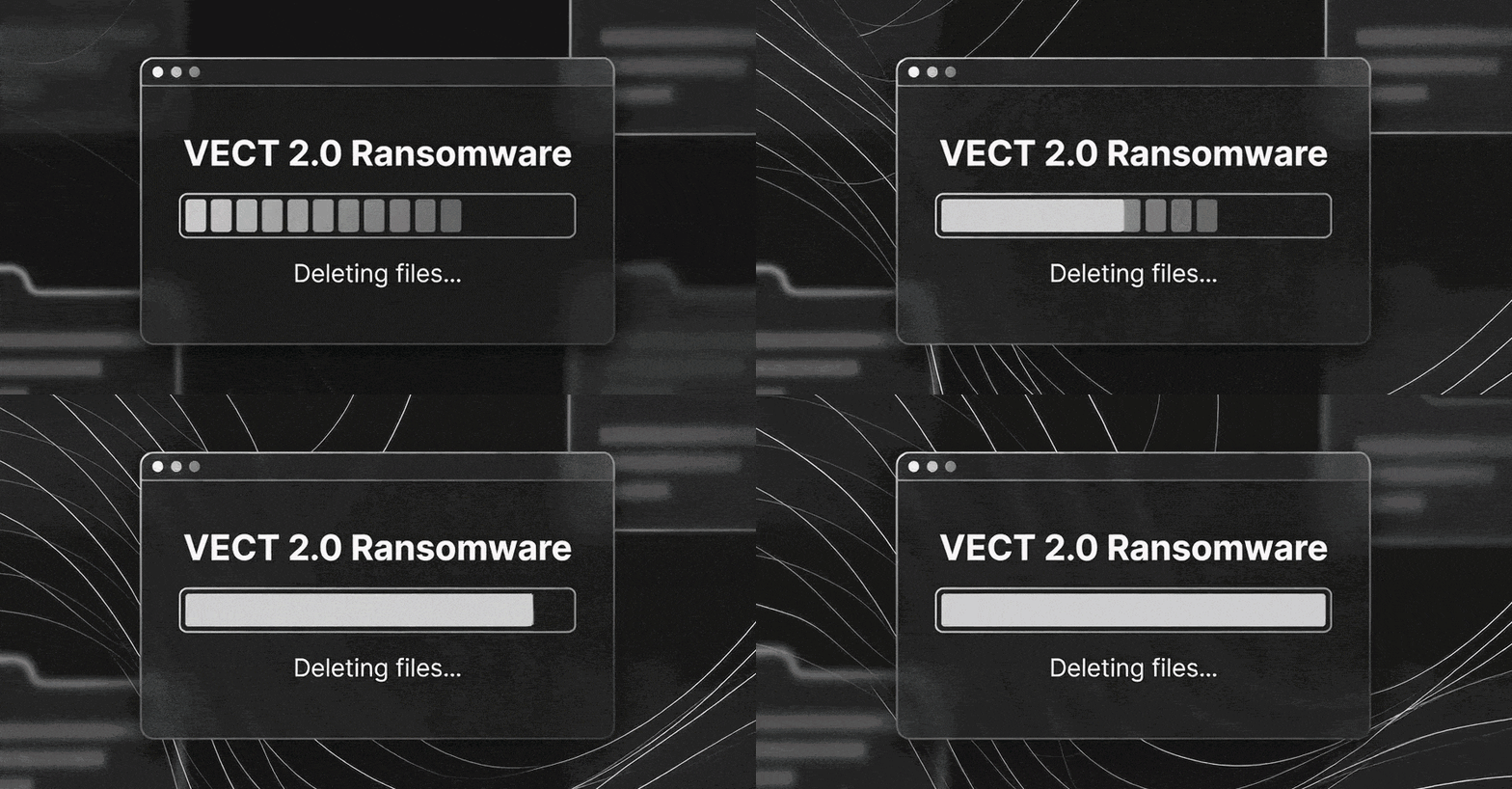
Wipers are back—with a vengeance.
Mandiant’s team—Matthew McWhirt and crew—just dropped their “Proactive Preparation and Hardening Against Destructive Attacks: 2026 Edition,” a no-nonsense playbook for the data-destruction wars ahead. And here’s the data-driven kicker: in unstable times, these attacks spike 300%—think Ukraine 2022, when NotPetya 2.0 variants torched millions in recovery costs. They’re not ransomware demanding cash; they’re scorched-earth tactics from nation-states or hacktivists aiming to cripple, not just steal.
Look, threat actors don’t fling wipers daily—reprisal risks keep ‘em holstered for big geopolitical bangs. But when conflict flares? Boom. Cheap, deniable, devastating. Mandiant’s guide isn’t pie-in-the-sky theory; it’s battle-tested from Google SecOps frontline data, spotting BABYWIPER file erasures and cmd-launched self-deletes before they nuke your drives.
Why Destructive Attacks Hit Harder in 2026
Geopolitics don’t sleep. With U.S. elections looming and Middle East tensions simmering—echoing the 2012 Shamoon wiper that paralyzed Saudi Aramco for weeks—expect nation-states to dust off their delete buttons. My unique take? Unlike Shamoon’s crude oil-sector focus, 2026 variants will masquerade as ransomware, blending extortion with erasure to muddy attribution. Mandiant calls it right: these aren’t frequent, but when they drop, they’re surgical strikes on critical infra.
Organizations ignoring this? They’re betting on luck. The report stresses baselines—know your normal, flag the weird. Custom detections beat broad heuristics here, catching DLLhost masquerades or fsutil zero-outs that sig-based tools miss.
But wait—Mandiant isn’t reinventing wheels. Layer this atop your EDR, NDR stacks. It’s supplementary smarts for the anomalous.
Threat actors use destructive malware to destroy data, eliminate evidence of malicious activity, or manipulate systems in a way that renders them inoperable.
That quote nails it. Destruction isn’t secondary; it’s the mission.
Hardcore Tech Hardening: External Assets First
Start outside-in. Table 1 (yeah, the summary they tease) screams: identify, enumerate, harden external-facing assets. Exposed RDP? Patch it yesterday. Weak IIS configs? Lock ‘em down. Mandiant lists scalable wins—disable unnecessary services, enforce MFA everywhere, segment like your data depends on it (it does).
And endpoints? Brutal. Watch for rundll32 spawning DLLs with funky chars, services firing cmd.exe, or PowerShell zeroing files. Google SecOps customers get rule packs ready: “Multiple Exclusions Added To Windows Defender In Single Command”—that’s your early ping for tamperers.
Short para punch: Test it. Now.
Dive deeper—one overlooked gem: bcdedit mods via cmd, disabling crash dumps pre-wipe. Historical parallel? WhisperGate in Ukraine pulled this exact move. Prediction: copycats in 2026 will chain it with DD disk overwrites for forensic oblivion.
Here’s the thing—don’t just detect. Prevent. Immutable backups, air-gapped where it counts. Mandiant pushes wbadmin suspicions and path exclusions as red flags; baseline your Defender tweaks or get burned.
Organizational Resilience: Beyond the Tech
Tech’s table stakes. Real edge? Crisis orchestration. Out-of-band comms—decouple from your Active Directory nightmare. Pre-validate Slack alternatives or satellite phones; when AD’s toast, email’s dead.
Contingency plans? Map dependencies, prioritize apps. Manual fallbacks for payroll, ERP—drill ‘em quarterly. And vendors? Lock in IR firms, lawyers, negotiators pre-breach. No scrambling mid-meltdown.
Practice. Immutable backups restored via out-of-band? Hit RTOs under 4 hours, or you’re toast. Mandiant’s living resilience posture—love it, but critique: too many orgs treat exercises as checkboxes. Make ‘em brutal; simulate full wiper chaos.
Six sentences here for density: First, establish baselines. Second, monitor divergences. Third, integrate Google SecOps packs. Fourth, harden MDMs—new update flags endpoint abuse. Fifth, recovery sequences matter. Sixth, geopolitics amps the urgency.
Will Your Defenses Hold Against 2026 Wipers?
Spoiler: probably not, if you’re winging it. Mandiant’s detections shine—“Overwrite Disk Using DD Utility,” “Disabling Crash Dump For Drive Wiping”—but fidelity demands your env knowledge. No universal baseline fits all.
Sharp position: this guide’s gold, yet Google’s SecOps tie-in smells like smart sales. Still, data backs it; frontline threats pack real punch. Unique insight—pair with Mitre ATT&CK mappings for custom Sigma rules. Bold call: orgs skipping this prep face 5x recovery costs versus drilled peers, per IBM averages.
Fragment: Scale it.
Medium: External assets lead, but internals lurk—lateral moves pre-wipe are the stealth phase.
Sprawling wrap: And sprawling sentence to land—while ransomware grabs headlines, wipers’ low-reprisal profile (for state actors) means underinvestment; flip that with Mandiant’s playbook, or watch competitors rebuild faster post-2026 flare-ups.
Why Does This Matter for CISOs Right Now?
Budgets tighten, threats balloon. Destructive attacks? Your board’s nightmare—zero revenue, max headlines. Mandiant quantifies: instability = attack surges. Prep scales; a $50K SIEM tweak saves millions.
Em-dash aside—love the MDM update; attackers pivot to fleet management for mass wipes.
( Sarcastic note: because who needs device control? )
🧬 Related Insights
- Read more: 2.6 Million Records Leaked in Employee Benefits Breach: March 23 Threat Intel Roundup
- Read more: GCP Vertex AI’s Hidden Trap: How AI Agents Become Corporate Double Agents
Frequently Asked Questions
What are destructive cyberattacks?
Wipers, malware shredding data or systems—no recovery, pure sabotage. Think NotPetya-scale chaos.
How to harden against wiper malware?
Baseline activity, flag anomalies like Defender exclusions or DD overwrites. Use Mandiant/Google SecOps rules.
Is Google SecOps essential for this?
Helpful for detections, but layer on your EDR. Custom rules win with your baselines.