Rain patters against the server rack in a dimly lit data center, while a bot from halfway around the world types ‘2027’ into a fake login field.
Number usage in passwords — yeah, that tired topic — just got a weird twist from honeypot logs spanning April 2024 to March 2026. Bots aren’t waiting for the ball to drop; they’re already stuffing future years into their brute-force attempts.
It’s almost comical.
Think about it: we’re in late 2024, and ‘2027’ pops up in August. Why? Because password policies force yearly changes, and humans — or the bots mimicking us — latch onto dates like Spring2026! or Easter2026!. Honeypots caught 496,562 unique passwords, and the patterns? Predictably dumb.
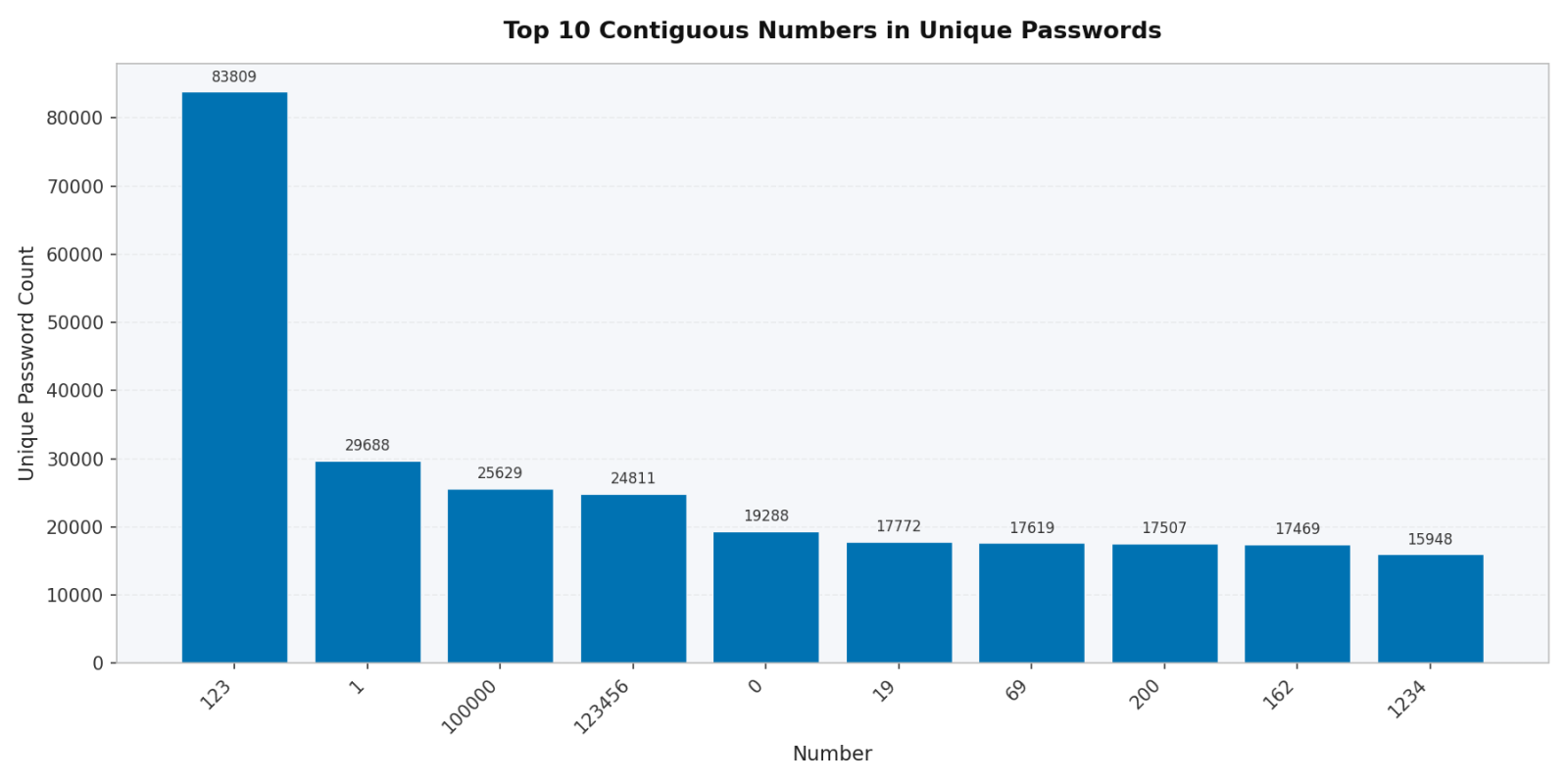
Top Contiguous Numbers: Bots Love ‘123’ (Still)
Figure it out yourself from the data: ‘123’ and ‘1’ top the list. But here’s the kicker — not your usual 123456 ladder. Nope. ‘100000’, ‘19’, ‘69’, ‘200’.
Turns out, some idiot was stress-testing with ICMP floods. That IP 147.45.47.117 wanted 100,000 packets per octet of a target IP. Seen across GCP, Digital Ocean, Azure — everywhere but AWS. Dry humor alert: AWS honeypots must be on vacation.
And those weren’t even passwords half the time. Bots tried commands too, like downloading scripts from 45.125.66.215 to install shady services. File never landed, thank goodness. But it shows numbers aren’t just for logins; they’re payloads.
Back to actual passwords. Digits? Low ones rule: 0,1,2,3. Shocker.
Four-digit combos? ‘1234’ reigns, with last year’s digits trailing. ‘2026’ is climbing, but slowly — data’s fresh.
Most of the passwords containing what could be a year are introduced the year before. However, that may vary widely from the beginning to the end of the previous year.
That’s straight from the analysis. Heatmaps confirm: 2025 peaks in 2025 logs, 2024 in 2024. But 2027? Sneaky early bird.
When Do Bots Start Dreaming of Future Years?
First sightings tell the tale:
| Year | First Seen | Example |
|---|---|---|
| 2024 | 11/1/2023 | sysadmin2024 |
| 2025 | 4/5/2024 | @dm1n2025 |
| 2026 | 5/6/2024 | @2026 |
| 2027 | 8/11/2024 | 2027 |
Bots from sketchy IPs like 27.47.108.14 spam even further out: 2028, 2029, up to 2035. One gem: ‘020283’ from April ‘24. Birthday? Or just noise?
Here’s my unique hot take — and it’s not in the original: this mirrors the Y2K panic, but dumber. Back then, coders feared millennium bugs; now, bots preempt our calendar-based laziness because leaks from breaches (think 2023’s 12 billion credential dumps) train them on real patterns. Prediction: by 2028, AI-driven crackers will generate passwords blending leaked birthdays with future years, making ‘19820313’ the new ‘password1’. Corporate password rules? Useless theater.
But wait — seasons too. AprilShowers26. Bloom2026. Bots update yearly, syncing with our forced resets. Or do they scrape fresh from dark web markets?
Why Does This Matter for Password Security?
Short answer: it doesn’t change much. Bots are predictable — low digits, sequential, years ahead. Your ‘Spring2026!’? They’ll guess it by March.
Longer ramble: Honeypots expose the banality. DDoS preppers mix in numbers as commands. Script droppers repeat failures. All while real users pick ‘123’.
One paragraph wonder: Fix it with passphrases, not policies.
And that PR spin from security vendors? ‘Change passwords quarterly!’ Yeah, it just funnels us into bot dictionaries. Skeptical? Damn right.
Heatmaps show ‘2023’ spiking late 2024 — old habits die hard, even in bots. Future years like 2030 from April ‘24? Some Chinese IP grinding patterns.
Dry laugh: If bots predict 2035, what’s next — passwords with our retirement dates?
Is Number Usage in Passwords Getting Smarter?
Nah. Still dumb. Contiguous blocks scream amateur hour. Years? Calendar slaves.
But the ICMP twist — that’s crafty. Not passwords, but probes disguised as logins. Honeypots catch it because, well, they’re honeypots. Real sites? Flooded.
Unique insight redux: This data predicts a surge in ‘seasonal’ brute-force around holidays. Passover2026 by December ‘25. Mark it.
Frequency charts? 0-3 dominate. 4-digit years lag until the year hits. Bots aren’t psychic; they’re parasitic on our leaks.
Wander a bit: Imagine the botnet herder, updating scripts for ‘2027’ in summer ‘24. Why bother? Because it works — 496k samples don’t lie.
🧬 Related Insights
- Read more: EU Cloud Hack: Stolen AWS Key Exposes 30 Entities’ Secrets
- Read more: North Korea’s Hackers Vaporize $285M from Drift in Seconds
Frequently Asked Questions
When did ‘2027’ first appear in honeypot passwords?
August 11, 2024, in a bare ‘2027’ guess.
Why do bots use future years in passwords?
They mimic human patterns from forced changes and data leaks, introducing them early to cover bases.
Are honeypot passwords real threats?
Yes — bots test these on real targets, revealing active campaigns like script installs and DDoS.