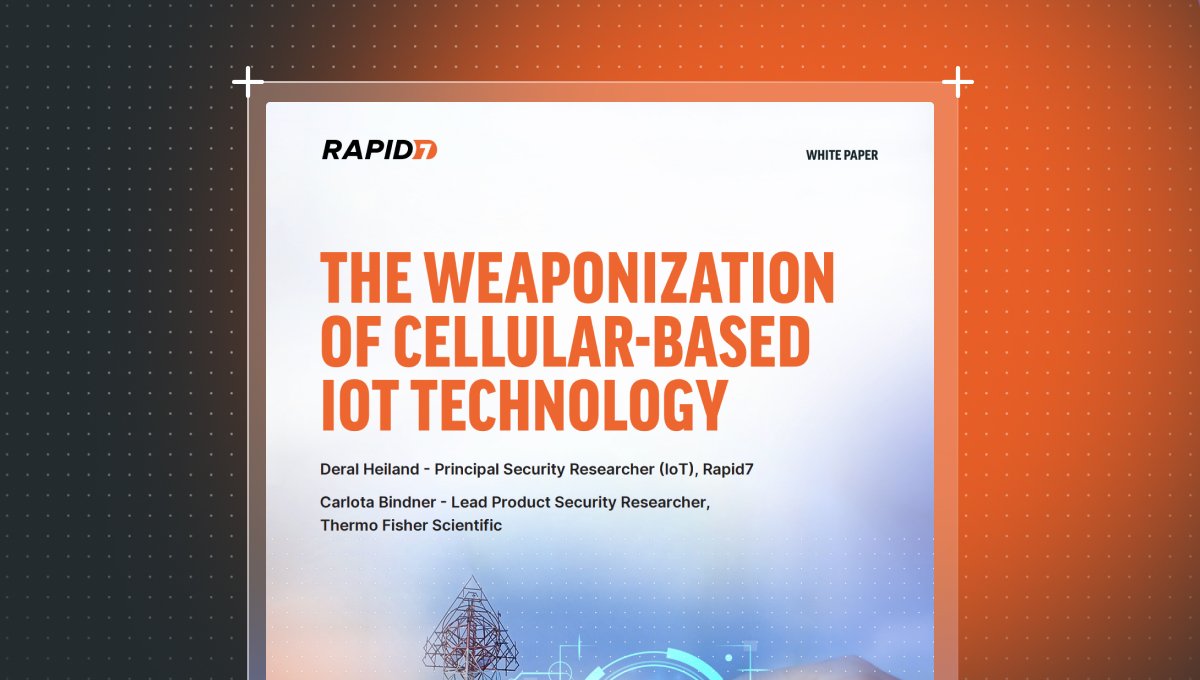
Zero. That’s how many cellular IoT devices Rapid7 tested that came with tamper protections.
I’ve been kicking tires in Silicon Valley for 20 years, watching companies peddle ‘secure’ gadgets that crumble under a stiff breeze. This whitepaper from Rapid7—‘The Weaponization of Cellular Based IoT Technology’—drops a cold truth bomb: your fancy cellular-connected sensors, trackers, whatever, they’re not just dumb endpoints. They’re golden tickets for hackers who snag physical access.
Deral Heiland and Carlota Bindner didn’t just theorize. They built tools. A TCP port scanner via AT commands. An S3 bucket enumerator. SOCKS5 proxies tunneling through cellular modules. Metasploit modules to boot. It’s practical, scary stuff presented at RSAC 2026.
Why Cellular IoT Devices Are Hackers’ New Playground
Look, cellular modules sound smart—always-on, no Wi-Fi needed. But here’s the rub: they expose UART and USB interfaces like open bar at happy hour. Unused paths? Attackers sniff ‘em, manipulate ‘em. Snip a few PCB traces, swap in their own host, and boom—your device’s cellular radio is theirs. Routing traffic? Check. Exfiling data? Check. Hiding C2 in legit-looking device chatter? Double check.
Most accept raw AT commands for sockets, HTTP, TCP tunnels. No encryption on sensitive data. Private APNs? Useless if the module’s compromised upstream.
“Cellular modules often expose multiple interfaces, and unused UART or USB paths can provide direct access. With targeted printed circuit board modifications, an attacker can reroute traffic through the cellular interface.”
That’s straight from the whitepaper. Chilling, isn’t it? These aren’t edge cases; every device they poked lacked basics like tamper seals.
And get this—my hot take, absent from their report: this reeks of the early 2000s Bluetooth bluesnarfing era. Remember? Vendors ignored physical access risks, thought ‘wireless’ meant invincible. We got mass hacks, recalls, lawsuits. Cellular IoT’s on the same collision course, but with cloud stakes. Who’s making bank? Not users. Module makers and telcos, skimping on security to hit price points.
Short para for punch: Supply chains will bleed.
Can Attackers Really Own Your Cloud from a Stolen Sensor?
Absolutely. Physical access—think lost shipment, insider, dumpster dive—lets ‘em observe interchip comms. USB, UART: all hangin’ out. Replace the host processor? Now an external laptop commands the cellular module. Recon cloud services. Pivot laterally. All while blending into expected traffic.
They demo’d it. Proof-of-concepts aren’t hypotheticals; they’re weaponized. That S3 enumerator? It’ll crawl your buckets if you’re not vigilant. SOCKS5 proxy? Routes attacker traffic out your device’s pipe, masking origins.
Organizations, wake up. Treat these as privileged keys. Disable unused interfaces. Encrypt end-to-end before the module touches data. Monitor APNs like hawks. Hardware testing? Mandate it, or regret it.
But will they? Vendors love buzz like ‘5G IoT revolution’—code for cost-cut corners. Rapid7’s calling bullshit, politely.
One sentence wonder: History repeats if you’re lazy.
Who’s Profiting While Your IoT Burns?
Follow the money. Cellular module suppliers—Quectel, Sierra, etc.—ship millions sans protections. IoT makers bolt ‘em on for ‘connectivity,’ chase margins. Cloud providers? They get the breach bill. Attackers? Free ride to your crown jewels.
Bold prediction: 2027 sees the first mega-breach via cellular IoT supply chain. Not if, when. We’ve seen OT hacks; this scales to everyday fleets—logistics, utilities, healthcare trackers.
Rapid7’s not alone. Their related posts scream pattern: CES 2026 IoT risks, building sector supply chains, DEF CON rootkits. Deral Heiland’s on a tear.
So, what’s the fix? Beyond basics—firmware signing, secure boot on modules (rare today), physical tamper meshes. APN firewalls that inspect AT command flows? Dream big.
Wander a sec: I once covered a ‘secure’ pacemaker hack. Vendor spun it as ‘theoretical.’ Patients disagreed. Don’t let cellular IoT become that.
🧬 Related Insights
- Read more: React2Shell: CVE-2025-55182 Lets Hackers RCE Unpatched React Servers in One HTTP Shot
- Read more: Germany Names REvil and GandCrab Boss: Meet Daniil Shchukin
Frequently Asked Questions
What does Rapid7’s cellular IoT whitepaper reveal?
It shows physical attacks on cellular modules let hackers control cloud access, exfil data, hide in traffic—zero tamper protections in tests.
How do attackers exploit cellular IoT devices?
Via UART/USB sniffing, PCB mods to hijack modules, AT commands for scanning/proxies—no encryption helps.
Are cellular IoT devices safe for enterprise?
Not without hardening: encrypt data, kill unused interfaces, monitor APNs. Treat as high-priv entrypoints.